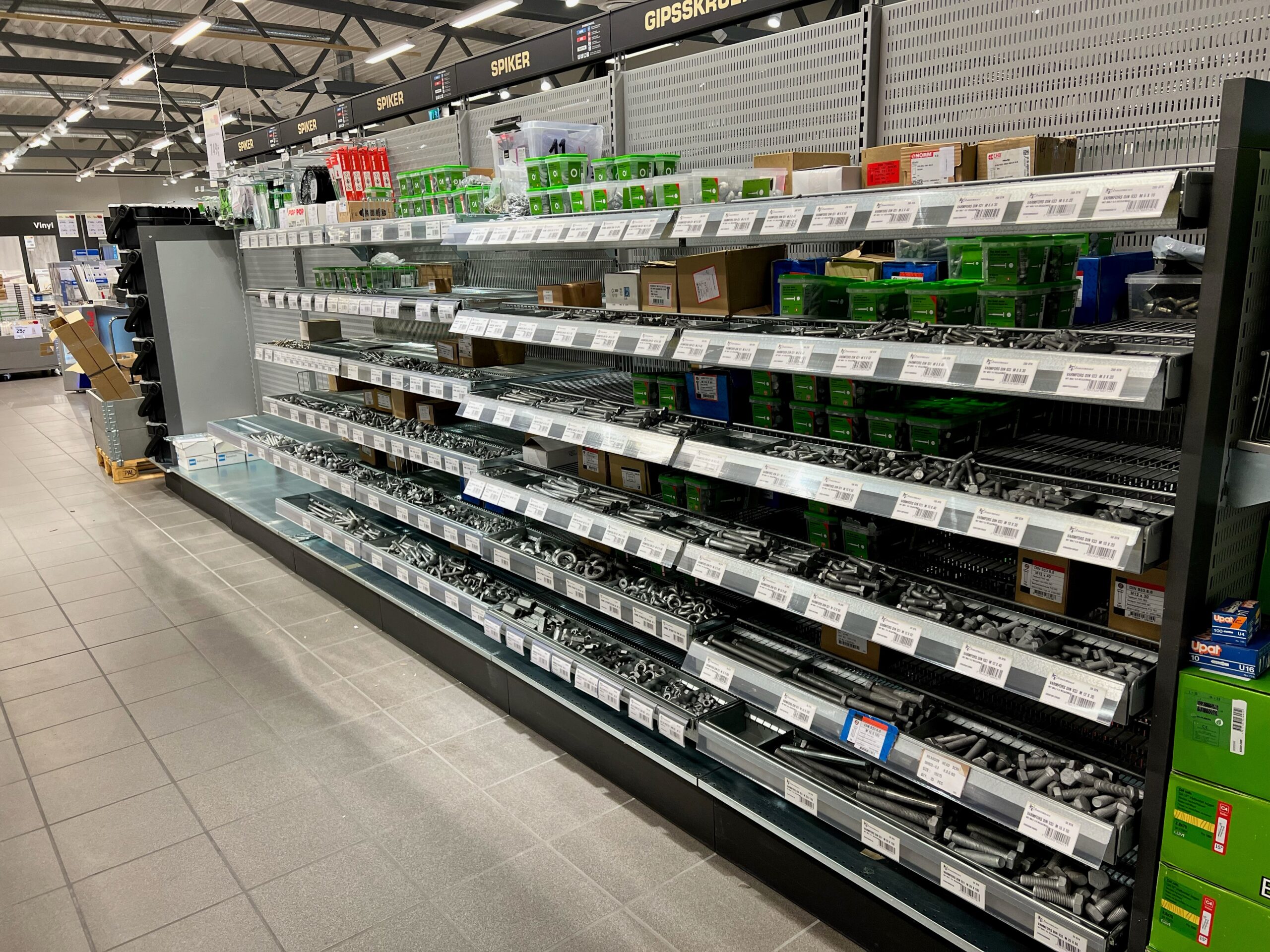
In heavy industry, a threaded connection is not just a fastener — it is a load-bearing, safety-critical joint. The wrong thread type in the wrong application leads to preload loss, joint failure and unplanned downtime. Understanding the difference between machine threads, thread-forming, thread-cutting and wood screws is the first step towards correct specification.
What are threads?
A thread is a helical structure on a screw or bolt that converts rotational force into clamping force. The geometry of the threads — thread pitch, flank angle and depth — determines how it engages the base material and how much load it can carry. Thread pitch is the distance between each thread crest and is the most important parameter when selecting a thread type.
If you choose a coarse pitch in a fine-thread application, the joint loses preload under vibration. If you choose a fine pitch in a fast-assembly application, installation becomes slow and error-prone. In oil and gas, mining, aquaculture and infrastructure, a failed threaded connection does not just mean rework — it means production stoppage, safety incidents and regulatory breaches.
Material compatibility — which thread type suits what?
This matrix shows the recommended thread type by base material:
Base material |
Machine threads (with nut) |
Machine threads (tapped hole) |
Thread- forming |
Thread- cutting |
Wood screws |
Structural steel (>3 mm) |
✓ |
✓ |
— |
✓ (field) |
— |
Carbon steel (1–3 mm) |
✓ |
✓ |
— |
✓ |
— |
Stainless steel |
✓ |
✓ |
— |
Limited |
— |
Aluminium |
✓ |
✓ |
✓ |
— |
— |
Cast iron |
✓ |
✓ |
— |
✓ |
— |
Thermoplastic |
— |
— |
✓ |
— |
— |
Structural timber / CLT |
— |
— |
— |
— |
✓ |
Machine threads — the industry standard
Machine threads are the industry standard for bolted joints with nuts or pre-tapped holes. They follow ISO 68-1 and DIN 13 for metric, and ASME B1.1 for imperial UNC/UNF. They withstand repeated assembly and disassembly without wear when the correct torque and lubrication are applied.
Used for, among other things:
- Bolted flange connections in oil and gas pipelines and process systems
- Compressor housings and pump units in energy installations
- Structural steel connections in offshore and marine infrastructure
- Mining equipment and heavy machinery where controlled preload and repeated service access are required
Thread-forming screws — chip-free assembly
Thread-forming screws displace material through cold deformation instead of cutting the thread. This creates a tight thread with no metal chips and high pull-out strength.
The pilot hole diameter must be accurate — a deviation of 0,1 mm directly reduces thread engagement. Rule of thumb for pilot hole diameter:
Screw diameter |
Pilot hole in aluminium |
Pilot hole in thermoplastic |
M3 |
2,75 mm |
2,80 mm |
M4 |
3,70 mm |
3,75 mm |
M5 |
4,60 mm |
4,70 mm |
M6 |
5,55 mm |
5,65 mm |
M8 |
7,40 mm |
7,55 mm |
M10 |
9,30 mm |
9,50 mm |
Thread gauges are used to verify the pilot hole diameter and thread pitch before installation. Thread-forming screws are not suitable for steel thicker than 3 mm, cast iron or joints that require frequent disassembly.
Thread-cutting screws — field installation in hard material
Thread-cutting screws actively cut a thread into the base material and produce chips. They are more tolerant of variations in pilot hole diameter than thread-forming screws, which makes them practical for field installation and repair work in remote or heavy industrial environments.
They are not suitable for hydraulic or pneumatic systems without chip control measures. The correct thread tooling for chip control is mandatory when working in closed systems, and chip handling must be documented in the work permit.
Used for:
- Cast iron, hardened steel and glass-fibre-reinforced plastic in heavy machinery
- Field repairs in mining and infrastructure where pre-tapped holes are not available
- Brackets, inspection covers and structural fixings with infrequent service requirements
Wood screws and ETA approval
Wood screws have a coarse thread pitch and a wide thread flank designed to grip effectively in the wood fibre. In heavy industry, wood screws fill a specific structural role in timber-based constructions and are not interchangeable with metal thread types.
For load-bearing applications, ETA approval under EN 1995 (Eurocode 5 — design of timber structures) is required. ETA (European Technical Assessment) is a harmonised European approval that documents that the screw has been tested for specific load conditions. Without an ETA, the screw cannot be used in certified load-bearing structures.
The thread pitch and thread diameter of wood screws must be dimensioned against the EN 1995 capacity table, not against a general product data sheet. Torque control with calibrated thread tooling is required in all load-bearing connections.
Used for:
- Scaffold bases and temporary structures at industrial plants and infrastructure sites
- Vibration-damping timber packing under machine foundations in mining and energy facilities
- Structural timber panels such as CLT (cross-laminated timber) and LVL (laminated veneer lumber) in infrastructure and energy projects
- Load-bearing timber structures with documented ETA approval
Decision matrix: which thread type do you choose?
The right thread type depends on three factors: base material, load condition and service frequency. Follow this decision chain:
- Are you bolting into a nut or a pre-tapped hole under structural or dynamic load → machine threads
- Are you fixing into aluminium, zinc or thermoplastic where chips are a risk → thread-forming screws
- Is the base material too hard for cold deformation and field installation is involved → thread-cutting screws
- Are you working with structural timber in a load-bearing structure → wood screws with ETA approval
- Is the joint exposed to high-frequency vibration in offshore, rotating or ATEX-classified environments → add a Nord-Lock wedge-locking washer regardless of thread type
Always verify thread pitch with a calibrated thread gauge at goods receipt. M12 and 1/2-UNC are almost identical in diameter, but have different pitches. Visual identification alone is not reliable and is a known cause of incorrect specification in the field.
Frequently asked questions
What is the difference between thread-forming and thread-cutting screws?
Thread-forming screws displace the material (cold deformation) and create no chips — suitable for soft metals such as aluminium and thermoplastic. Thread-cutting screws cut the material away and create chips — suitable for harder materials such as cast iron and glass-fibre-reinforced plastic.
What pilot hole diameter do I need for an M6 thread-forming screw?
In aluminium: 5,55 mm. In thermoplastic: 5,65 mm. Deviate from these values by more than 0,1 mm and thread engagement is significantly weakened. Verify with a thread gauge after drilling.
Do I need ETA-approved wood screws in all timber structures?
Only in load-bearing structures under EN 1995 (Eurocode 5). For non-structural fixing work, ordinary wood screws are sufficient. CLT and LVL structures always require ETA approval.
Can I use machine threads for field repairs in cast iron?
Only if the hole is pre-tapped and undamaged. If you have to cut the thread in the field, use thread-cutting screws — they tolerate less precise holes and provide better grip in cast iron.
Conclusion
Choosing a thread type is a specification decision, not a purchasing shortcut. In oil and gas, mining, aquaculture and infrastructure, the consequences of incorrect specification go far beyond a failed fastener — they affect production continuity, compliance with safety requirements and cost over the lifetime of the facility.
Every thread type — whether machine threads, thread-forming, thread-cutting or wood screws — has a defined material range, a load condition and a service context. Verify thread pitch, confirm material compatibility and document the specification. INDUSTRISALG stocks Nord-Lock for vibration-exposed joints and carries a broad range of ETA-approved wood screws in addition to standard machine threads in M3–M48.
Related reading
- Metric vs Imperial: UNC/UNF and where it is still used in industry
- How to specify fasteners correctly: 7 parameters from A to Z
Get in touch
Send us the application description — base material, load condition, service frequency — and we will propose the right thread type and confirm stock status. For vibration-exposed joints we recommend considering the Nord-Lock wedge-locking washer, which we hold in stock in all common dimensions.